

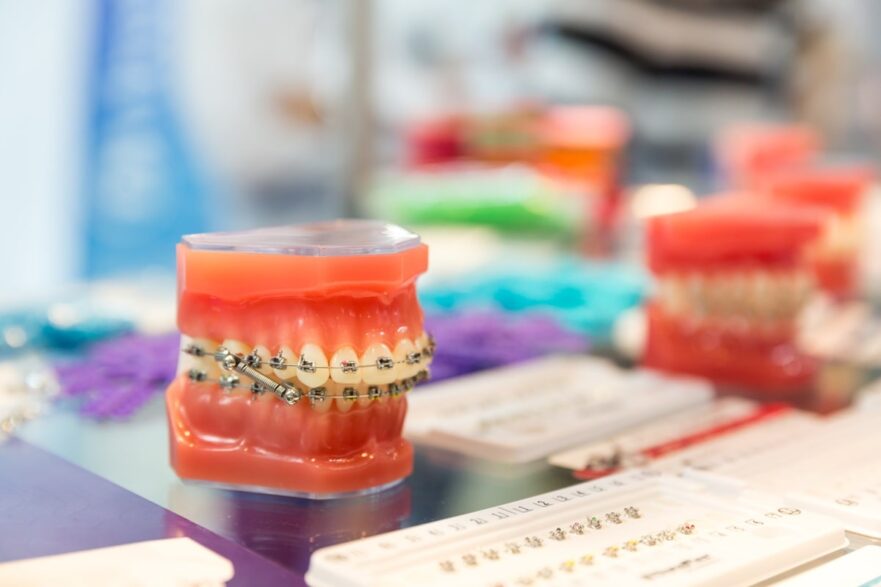
The thought of braces might bring to mind awkward teenage years, but the truth is, the foundation for a healthy, straight smile is often set much earlier. Recognizing the signs that your child needs orthodontic care is a crucial part of their dental journey. Early intervention can simplify future treatment, reduce costs, and set your child up for a lifetime of confident smiling.
The American Association of Orthodontists (AAO) recommends that all children have their first orthodontic evaluation by age 7. By this age, enough permanent teeth have arrived for an orthodontist to accurately assess your child’s bite and jaw growth and determine if and when treatment is necessary.
Here is a parent’s guide to the eight most telling signs that it’s time to schedule that first orthodontic visit.
Part I: The Dental Alignment Red Flags
1. Severe Crowding or Overlapping Teeth
This is perhaps the most visible sign. If your child’s teeth are growing in twisted, overlapping, or at odd angles, their jaw likely doesn’t have enough space to accommodate all their permanent teeth. This isn’t just a cosmetic issue; it makes thorough brushing and flossing nearly impossible, dramatically increasing the risk of cavities and gum disease.
2. Noticeable Gaps or Spacing Issues
While small gaps between baby teeth are normal, significant spacing in permanent teeth can be caused by missing teeth, teeth that are too small for the jaw, or habits like prolonged thumb-sucking. Appliances used for dental braces or other therapies can be used to close these gaps, improving both appearance and oral function.
3. Early or Late Loss of Baby Teeth
Baby teeth act as critical placeholders for permanent teeth.
- Losing baby teeth too early (before age 5) can cause surrounding teeth to drift into the empty space, blocking the permanent tooth’s path.
- Losing baby teeth too late (past age 9 or 10, or if permanent teeth are coming in behind them) can cause the adult teeth to erupt incorrectly, leading to crowding.
Part II: Signs Related to the Bite and Jaw
4. Difficulty Chewing or Biting
If your child frequently struggles to bite into food (like an apple) or chews awkwardly on only one side of their mouth, it’s a strong indicator of a bite misalignment (malocclusion). This could manifest as:
- Overbite: Upper front teeth significantly overlap the lower teeth.
- Underbite: Lower jaw protrudes, causing the lower teeth to sit in front of the upper teeth.
- Crossbite: Upper teeth bite inside the lower teeth instead of outside, often affecting one or both sides of the jaw.
Untreated bite issues can cause uneven tooth wear, jaw strain, and digestive problems due to improper chewing.
5. Jaw Pain, Clicking, or Shifting
A healthy jaw should open and close smoothly. If your child’s jaw shifts to one side, clicks, or pops when they eat or talk, it can signal an underlying skeletal or joint issue (Temporomandibular Joint Disorder, or TMD). Early orthodontic intervention is often key to guiding the jaw into a more balanced, comfortable position while they are still growing.
6. Frequent Biting of the Cheeks or Tongue
While occasional accidental biting happens to everyone, if your child repeatedly bites the inside of their cheek or their tongue, it suggests that their upper and lower teeth are not aligning correctly. This is often a sign of a bad bite that needs correction.
Part III: Habit and Speech Indicators
7. Persistent Thumb-Sucking or Pacifier Use
If thumb-sucking, finger-sucking, or pacifier use continues past the age of 4 or 5, the habit can significantly affect jaw growth and tooth position. It often leads to protruding front teeth or an open bite (a gap between the top and bottom front teeth when the mouth is closed). Early intervention can help correct these structural changes.
8. Mouth Breathing or Speech Difficulties
Consistent mouth breathing (especially during sleep) can be more than just a bad habit. It can signal a narrow jaw or palate, impacting facial development and leading to a misaligned bite. Similarly, certain speech issues, like lisping or difficulty pronouncing ‘s’ or ‘th’ sounds, can sometimes be caused by tooth spacing or bite problems. An orthodontist can determine if teeth alignment is a contributing factor.
The Next Step for Parents: Consultation is Key
Seeing any of these eight signs doesn’t necessarily mean your child needs treatment right away. It simply means they need an expert evaluation. An initial consultation with an orthodontist is usually complimentary and provides a clear road map. To get started, please visit our dental office to meet our specialists.
Orthodontic treatment often involves two phases: Phase I (early intervention, typically around age 7-10, using simple appliances like expanders) and Phase II (full treatment, usually in the early teens). By scheduling an evaluation now, you are taking the most proactive step to ensure your child has the healthiest, most functional, and most beautiful smile possible. We encourage you to book an appointment today!