

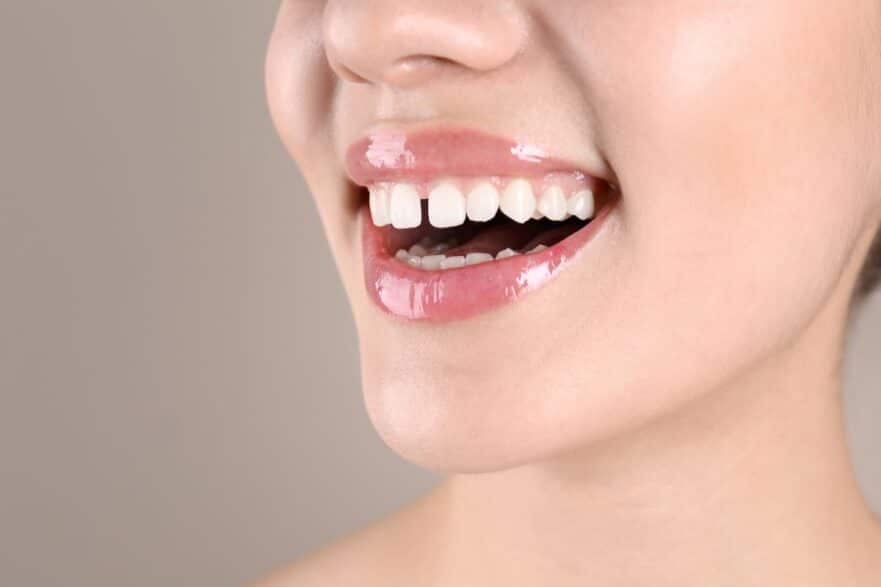
Look in the mirror, close your mouth naturally, and notice how your teeth come together. For most people, the upper front teeth slightly overlap the lower front teeth. But what if you look closely and notice a noticeable gap? What if your top and bottom front teeth simply refuse to touch at all, leaving an open space when you smile, speak, or try to bite into your favorite sandwich?
If you are dealing with this, you are not alone. In orthodontics, this condition is known as an open bite. While it may seem like a minor cosmetic quirk at first glance, an open bite can affect everything from digestion to daily speech patterns.
Understanding why your front teeth don’t touch is the first step toward reclaiming a healthy, fully functioning smile. Let’s dive into what causes an open bite, why it matters, and how modern care can fix it.
What Exactly Is an Open Bite?
An open bite is a specific type of malocclusion, the clinical term for a misalignment of the teeth or jaws. Instead of the upper and lower teeth fitting together snugly like puzzle pieces, a vertical gap remains between them when the jaw is fully closed.
Open bites generally fall into a few different categories:
- Anterior Open Bite: This is the most common variety, where the front teeth (incisors and canines) fail to overlap or touch, while the back molars meet normally.
- Posterior Open Bite: In this less common scenario, the front teeth touch, but a gap remains between the upper and lower back teeth.
- Dental vs. Skeletal Open Bites: A dental open bite is caused primarily by the positioning and angle of the teeth. A skeletal open bite, on the other hand, involves the actual growth pattern and vertical alignment of the jawbones themselves.
Why Don’t My Front Teeth Touch? Common Causes
Open bites rarely happen by accident. They typically result from a combination of genetics, childhood habits, and jaw development patterns. Pinpointing the root cause helps shape the ideal approach to fixing it.
1. Prolonged Childhood Habits
Did you suck your thumb, use a pacifier, or bottle-feed well past toddlerhood? Extended sucking habits are among the leading culprits behind childhood open bites. The constant outward pressure exerted by a thumb or pacifier prevents the front teeth from erupting downward into their proper positions, creating a localized gap.
2. Tongue Thrusting
We swallow hundreds of times a day without thinking. Normally, your tongue presses against the roof of your mouth behind your front teeth when you swallow. However, individuals with a “tongue thrust” habit push their tongue forward between the upper and lower front teeth instead. Every single swallow acts like a tiny battering ram against the teeth, gradually pushing them apart over time.
3. Genetics and Skeletal Growth
Sometimes, your DNA writes the script. If your upper and lower jaws grow at mismatched rates, specifically if the back jaw grows faster or longer than the front, it can vertically rotate the lower jaw downward. This results in a skeletal open bite that is deeply rooted in your family’s structural traits.
4. TMJ Disorders and Airway Issues
Chronic jaw joint (TMJ) inflammation or structural issues can alter how you rest and position your jaw. Additionally, children who suffer from chronic nasal congestion, enlarged tonsils, or allergies may breathe through their mouths constantly. Mouth breathing changes resting tongue and head posture, which frequently paves the way for an open bite to develop.
Beyond Aesthetics: Why You Shouldn’t Ignore an Open Bite
It is easy to brush off a dental gap if you feel like your smile still looks unique or charming. However, an open bite does much more than affect your reflection in photographs. Leaving it untreated can lead to a cascade of functional and oral health concerns:
- Chewing Difficulties: When your front teeth don’t touch, biting into everyday foods like apples, pizza crusts, or subs becomes frustratingly difficult. Your back teeth end up doing 100% of the heavy lifting.
- Speech Impediments: Your tongue relies on your front teeth to form crisp, clear sounds—especially letters like “S,” “T,” “Z,” and “Th.” An open bite can lead to a lisp or distorted speech patterns.
- Uneven Tooth Wear: Because the load of chewing is unevenly distributed across your dental arches, your back teeth experience excessive friction, early enamel erosion, and microscopic fracturing.
- Jaw Pain and TMJ Strain: The muscles of your jaw have to work overtime to compensate for a misaligned bite. Over the years, this can translate into chronic jaw soreness, tension headaches, and clicking or popping in the temporomandibular joints.
How Is an Open Bite Corrected?
The good news is that modern orthodontics offers brilliant, highly effective solutions to close open bites and restore harmony to your bite. Because every smile is structurally unique, your treatment plan will depend heavily on your age, the severity of the gap, and whether the issue is strictly dental or rooted in your skeletal structure.
If you are wondering what a corrective journey looks like, a qualified orthodontist may utilize several distinct methods:
- Habit-Breaking Appliances: For younger children whose jaws are still developing, specialized appliances can gently discourage tongue-thrusting or thumb-sucking, allowing nature to guide the teeth back into contact.
- Traditional Braces & Elastics: For teens and adults, traditional metal or clear ceramic braces provide meticulous control over individual tooth movement. Strategically placed orthodontic elastics (rubber bands) help exert vertical pulling forces to draw the upper and lower teeth together.
- Clear Aligners: Mild to moderate open bites can frequently be resolved using transparent, removable aligner trays. They offer a discreet, comfortable lifestyle fit for adults and older teens who want to straighten their teeth without metal brackets.
- Surgical Orthodontics (Orthognathic Surgery): For adults with severe skeletal open bites where the jaw bones themselves are significantly misaligned, combining orthodontic care with corrective jaw surgery is often the gold standard. An oral and maxillofacial surgeon works hand-in-hand with your specialist to reposition the jaw into a balanced, functional alignment.
Taking the Next Step Toward a Balanced Smile
If your front teeth don’t touch, living with the functional limitations doesn’t have to be permanent. Correcting an open bite protects your long-term oral health, shields your jaw joints from unnecessary wear, and gives you the confidence to laugh and smile without hesitation.
Are you ready to find out what is causing your bite gap and explore your personalized treatment options? We invite you to visit our dental office for a comprehensive evaluation. To get started on your custom smile transformation, book an appointment with Compton Orthodontics today!
Frequently Asked Questions
1. Can an open bite fix itself without treatment?
In very young children, if a thumb-sucking habit is stopped early enough, a mild open bite can sometimes self-correct as permanent teeth erupt. However, once adult teeth are fully in place, an open bite will virtually never correct itself and usually worsens over time without professional intervention.
2. How long does open bite treatment take?
The timeline varies depending on your age and the complexity of the malocclusion. On average, comprehensive orthodontic treatment for an open bite ranges from 12 to 36 months. Simple dental cases in younger patients may wrap up faster, while severe skeletal cases involving jaw alignment can take longer.
3. Is correcting an open bite painful?
While you may experience some mild temporary soreness or pressure for a few days after getting braces tightened or switching to a new set of aligners, modern orthodontic techniques are designed to be as comfortable as possible. Your care team will guide you through managing any minor discomfort.
4. Will my teeth move back after treatment?
Teeth have a natural lifelong tendency to shift. That is why the retention phase is a crucial part of the process. Following your active treatment, wearing custom retainers as directed by your specialist is essential to locking in your brilliant new bite for life.