

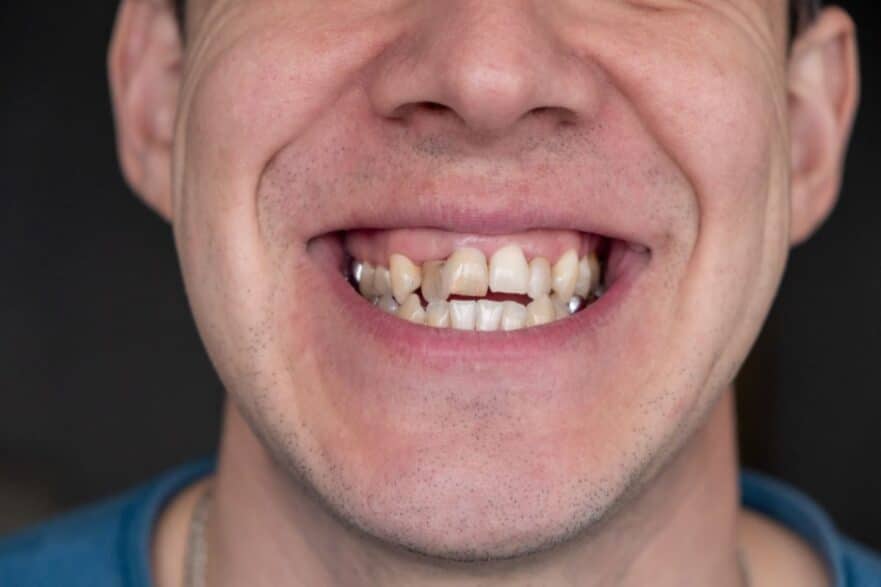
When you look in the mirror and notice overlapping, twisted, or tightly packed teeth, it is easy to see the issue as purely cosmetic. However, dental crowding is more than a visual quirk; it can make brushing and flossing harder, trap harmful plaque, and eventually lead to gum inflammation or tooth decay.
If you or your teenager has significant overlap, you might wonder how an orthodontist plans to fix it. A common question patients ask during their initial consultation is: Can severe teeth crowding be fixed without extracting teeth?
Decades ago, pulling permanent teeth was a standard go-to solution to create “real estate” in a cramped jaw. Fortunately, modern orthodontic advancements have changed the game. Today, extracting teeth is rarely the default option. Let’s dive into how modern orthodontic treatment addresses severe crowding and whether you can achieve a straight, healthy smile without losing any teeth.
Understanding Why Teeth Crowding Happens
Dental crowding typically happens because your teeth don’t fit the size of your jawbone. Think of it like trying to fit ten people into a car built for six; things get squeezed very quickly. Genetics strongly influences this size discrepancy. You might inherit a smaller jaw from one parent and larger teeth from the other, resulting in a traffic jam along your dental arch.
Other factors can also contribute to crowding, including:
- Early or late loss of baby teeth
- Genetics controlling tooth eruption patterns
- Habits like prolonged thumb-sucking in childhood
- Natural shifting of teeth as we age
When crowding becomes severe, teeth may rotate, push each other out of alignment, or erupt entirely outside the normal arch line.
The Short Answer: Can You Fix It Without Extractions?
Yes, in many cases, severe teeth crowding can be corrected without extracting permanent teeth.
Thanks to innovative diagnostic tools and modern techniques, orthodontists can often leverage alternative methods to create the necessary space. A skilled specialist’s primary goal is to preserve your natural dental structure whenever possible.
However, whether you can avoid extractions depends on the severity of the crowding, the patient’s age, and the jaw’s skeletal structure. During a comprehensive evaluation, your orthodontist will look at digital scans, jaw proportions, and facial balance to determine the safest, most effective path forward.
Modern Techniques to Create Space Without Extractions
If teeth can’t be shifted into a straight line without pushing them off the bone, an orthodontist has several clever tricks up their sleeve to create room.
1. Arch Expansion
If a patient’s jaw is narrow, expanding the dental arch is often the most effective non-extraction approach. In younger patients whose jawbones are still actively growing, specialized appliances like palatal expanders can gently widen the upper jaw. For adults, modern braces and clear aligners can also flare or widen the arch slightly, moving teeth outward into a healthier, broader curve to accommodate the crowd.
2. Interproximal Reduction (IPR)
Sometimes, only a tiny fraction of space is needed between each tooth to relieve a tight squeeze. Interproximal reduction, often called slenderizing, involves gently polishing away an microscopic amount of enamel (measured in fractions of a millimeter) from the sides of adjacent teeth. It is completely safe, virtually painless, and creates just enough breathing room to align overlapping teeth without altering your overall bite or tooth health.
3. Distalization
Distalization is a method where back teeth (like your molars) are pushed backward toward the back of the mouth. By creating space at the rear of the dental arch, a “domino effect” allows the front teeth to drift backward into proper alignment. Specialized orthodontic appliances, temporary anchorage devices (TADs), or clear aligners can accomplish this movement efficiently.
When Are Tooth Extractions Still Necessary?
While non-extraction treatments are preferred and often successful, some extreme scenarios still make removing a tooth (or teeth) the best clinical choice.
If a patient has severe skeletal discrepancies, protruding lips caused by severely forward-leaning teeth, or impacted teeth with no remaining bone, extractions may be recommended. Removing a predetermined tooth gives the remaining teeth the exact clearance they need to align stably over the jawbone, preventing long-term issues like gum recession or root damage.
Your orthodontist will always weigh the pros and cons carefully. If extractions are advised, it is because preserving every tooth would compromise the long-term stability and health of your smile.
Why Professional Evaluation Matters
Every smile is completely unique, meaning a cookie-cutter approach simply doesn’t work in orthodontics. What works for a teenager with a growing jaw might differ entirely from an adult treatment plan.
If you are tired of hiding your smile or struggling to clean between overlapping teeth, the best step you can take is to visit our dental office for a professional assessment. An expert evaluation ensures that your individual bone structure, bite alignment, and aesthetic goals are all factored into a customized roadmap.
Take the First Step Toward Your Best Smile
Living with crowded teeth can affect more than your confidence; it can also affect your long-term oral health. If you are ready to explore your options and find out if you can achieve a straighter smile without extractions, we are here to help.
Book an appointment with Compton Orthodontics today! Let our friendly, experienced team design a customized treatment plan to give you a healthy, confident smile you’ll love showing off.
Frequently Asked Questions
1. Can adults fix severe crowding without extractions?
Yes. While younger patients benefit from growing jaws, adults can successfully treat crowding using modern braces, clear aligners, IPR, or arch development techniques. A personalized consultation will reveal what is possible for your specific case.
2. Does fixing crowded teeth hurt?
Orthodontic adjustments involve applying gentle, sustained pressure to guide teeth into place, which can cause mild soreness for a day or two after an adjustment. However, modern techniques and materials are designed to make the process as comfortable as possible.
3. How long does non-extraction treatment take?
Treatment duration varies depending on the severity of the crowding and the chosen method. On average, comprehensive orthodontic treatment takes anywhere from 12 to 24 months.