

An overbite, a common form of malocclusion (misaligned bite), occurs when the upper front teeth significantly overlap the lower front teeth. While a slight overlap is normal, a deep overbite can lead to problems, including abnormal wear on the teeth, jaw pain (TMJ issues), difficulty chewing, and aesthetic concerns.
Traditionally, braces were the undisputed champion for bite correction. However, with the rise of modern orthodontics, many adults and teens wonder about the clear, discreet alternative: Can Invisalign fix an overbite?
The short answer is a definitive yes, for many cases. Invisalign treatment can be highly effective for correcting mild to moderate overbites, offering a clear and comfortable path to a healthier, more aligned smile.
How Invisalign Targets Overbite Correction
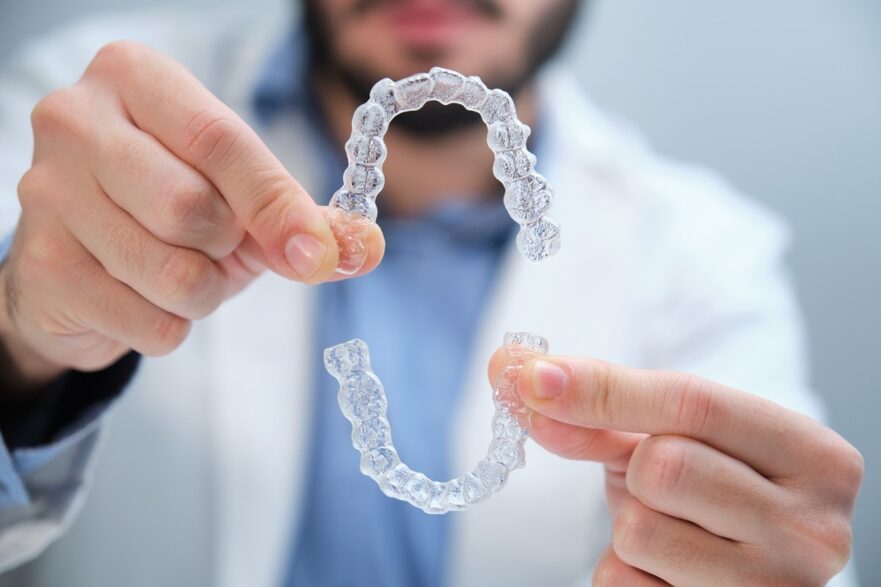
Invisalign uses a series of custom-made, clear plastic aligners that apply gentle, continuous pressure to gradually shift your teeth. For overbite correction, the treatment plan is specifically designed to move the upper teeth backward and/or the lower teeth forward to reduce the vertical overlap.
The key to Invisalign’s success in fixing overbites often lies in the use of specialized features and auxiliary appliances:
- SmartForce® Attachments: These are small, tooth-colored bumps temporarily bonded to certain teeth. They act like handles, giving the aligners a better grip to facilitate the complex, precise movements needed for bite correction.
- Orthodontic Elastics (Rubber Bands): Similar to those used with braces, elastics can be worn with Invisalign. They attach to small hooks or buttons on the upper and lower arches’ aligners (or attachments). Elastics apply the inter-arch force necessary to correct the jaw relationship and encourage the proper alignment of your bite.
- Invisalign Mandibular Advancement (for Teens): This specialized feature for growing patients uses small wings in the aligners to gently hold the lower jaw forward, guiding it toward a more correct bite while simultaneously straightening the teeth.
These advancements allow Invisalign clear aligners to address not just the misalignment of the teeth but also the position of the jaws, making it a powerful tool for comprehensive overbite treatment.
Severity Matters: When is Invisalign the Right Choice?
The effectiveness of Invisalign for an overbite heavily depends on the severity and underlying cause of the condition.
Mild to Moderate Overbites (Dental): You’re an excellent candidate if your overbite is primarily caused by the position of your teeth. These cases are highly treatable with Invisalign, often utilizing attachments and/or elastics to achieve correction.
Severe Overbites (Skeletal): If the overbite is caused by a significant discrepancy in the size or position of your upper and lower jaws (a skeletal issue), Invisalign may require consultation. In severe skeletal cases, traditional braces, a combination of treatments, or even corrective jaw surgery may be necessary to achieve a stable and functional result.
A dental overbite is caused primarily by the position of the teeth. A skeletal overbite is caused by a misalignment in the size or position of the upper and lower jaws. Invisalign is typically most successful in correcting dental overbites and less severe skeletal issues, particularly in adolescents who are still growing.
Benefits of Choosing Clear Aligners for Your Bite
Opting for Invisalign to correct an overbite comes with several distinct advantages:
- Aesthetics: The aligners are virtually invisible, allowing you to undergo treatment with confidence, without the noticeable appearance of metal wires and brackets.
- Comfort: The smooth plastic aligners are often more comfortable than traditional braces, which can sometimes irritate the cheeks and gums.
- Convenience and Oral Hygiene: Aligners are removable, meaning you can eat all your favorite foods without restriction and maintain your regular brushing and flossing routine, promoting better oral health throughout treatment.
- Predictability: The treatment plan is mapped out using advanced 3D technology, allowing you and your orthodontist to visualize the expected results before the treatment even begins.
Essential Factors for Treatment Success
While Invisalign is effective, its success—especially with bite correction—relies heavily on patient discipline:
- Compliance: You must wear your aligners for the recommended 20 to 22 hours per day. Failing to do so will slow or derail your treatment, as the prescribed pressure is not consistently applied.
- Consistent Use of Elastics: If your plan includes elastics, wearing them exactly as instructed is non-negotiable for achieving proper jaw alignment.
- Orthodontist Expertise: For overbite cases, choosing an experienced Invisalign provider is crucial. They possess the necessary skill to design a plan that precisely targets both tooth movement and bite correction.
Conclusion: Get The Expert Opinion
So, can Invisalign fix an overbite? For most mild to moderate cases, absolutely.
Invisalign provides a modern, discreet, and effective alternative to traditional braces for achieving a healthier bite and a beautiful smile. However, to determine if you are a suitable candidate, especially if you have a complex overbite, the first and most important step is to visit our dental office for a comprehensive evaluation. We’ll use 3D imaging to confirm your candidacy and create a precise treatment plan.
Ready to find out if Invisalign is right for you? Don’t delay achieving your perfect smile—book an appointment with our skilled team today.