

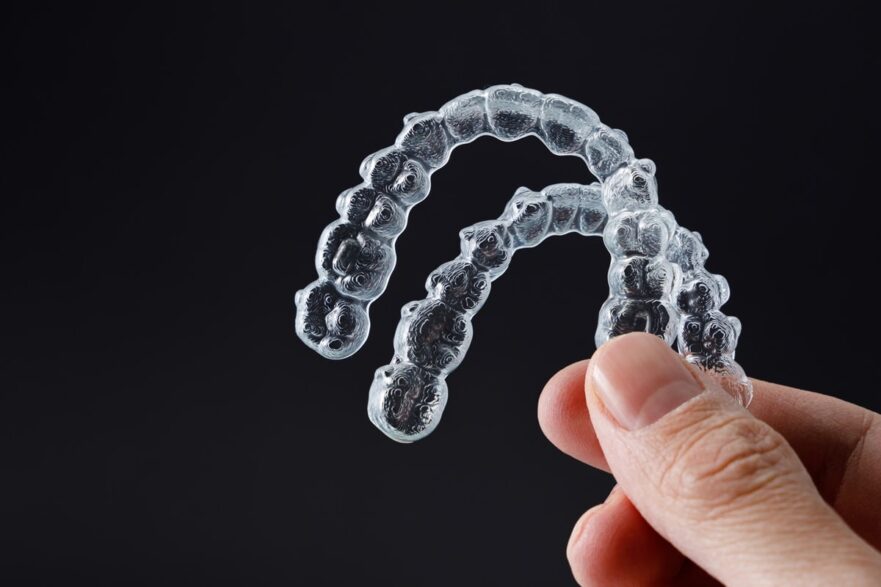
You’ve likely seen the stunning before-and-after photos: perfectly straight smiles achieved seemingly overnight with no metal in sight. The revolutionary appeal of Invisalign—clear, removable aligners—makes it the most popular discreet alternative to traditional braces.
It’s natural to wonder, “Can Invisalign fix every smile?”
The short answer is no, but it can fix most smiles! While the technology is incredibly advanced and continually improving, no single orthodontic treatment is a universal solution. The effectiveness of Invisalign clear aligners largely depends on the complexity of your specific dental condition and dedication to the treatment plan.
What Can Invisalign Successfully Correct? (The Good News!)
Invisalign is a powerful tool for correcting a wide range of mild to moderate alignment and bite issues. It uses a series of custom-made aligners to apply gentle, consistent pressure, gradually shifting your teeth into their optimal positions.
Here are the most common dental problems where Invisalign shines:
- Crowded Teeth: When there isn’t enough room in your jaw for all your teeth, they can overlap or twist. Invisalign can create the necessary space and effectively align crowded teeth.
- Gaps Between Teeth (Diastema): Whether you have a single space or multiple gaps, Invisalign aligners can methodically move the teeth closer together to close the spaces.
- Mild to Moderate Bite Issues (Malocclusions): This includes many cases of:
- Overbite: Where the upper front teeth excessively overlap the lower front teeth.
- Underbite: Where the lower front teeth sit in front of the upper front teeth.
- Crossbite: This is when some upper teeth bite inside the lower teeth.
- Open Bite: Where the upper and lower teeth do not touch when the mouth is closed.
- Minor Relapse: If your teeth have shifted slightly after previous orthodontic treatment (like braces), Invisalign is often the ideal solution for a quick correction.
For most patients seeking a straighter, healthier smile, the Invisalign treatment is a highly effective, comfortable, and aesthetically pleasing choice.
Understanding the Limitations: When Isn’t Invisalign the Best Choice?
While clear aligners have come a long way, certain complex cases may require the greater force and precise control that only traditional fixed braces can provide.
Invisalign may be less effective or not recommended for:
- Severe Jaw Alignment Issues (Skeletal Problems): If the misalignment results from a major jaw structure discrepancy rather than tooth positioning, corrective jaw surgery or conventional braces may be required to achieve a stable and functional bite.
- Extreme Tooth Rotations: Teeth that are severely rotated (e.g., more than 45 degrees) or dramatically tipped may require the stronger, multi-directional force of brackets and wires to move them into the correct orientation.
- Major Vertical Movement (Extrusion/Intrusion): Moving a tooth significantly up or down in the gum line (extrusion or intrusion) is generally more challenging with aligners than with fixed orthodontic appliances.
- Severely Impacted or Peg-Shaped Teeth: Teeth that are stuck in the jawbone or have an unusual shape may not provide the aligners with enough surface area to grip and move them efficiently.
- Very Large Gaps or Spaces: While small to moderate spacing is treatable, extremely large gaps often respond better to a combination of methods, including traditional braces.
The good news is that many orthodontists now utilize a hybrid approach. They use a short period of fixed braces to handle the most challenging movements, followed by Invisalign to complete the fine-tuning.
The Most Crucial Factor: Patient Compliance is Key!
Unlike traditional braces, which are permanently fixed for the duration of treatment, the success of your Invisalign journey rests largely in your hands.
Invisalign aligners must be worn for 20 to 22 hours daily, only removed for eating, drinking anything other than water, and performing your oral hygiene routine. If you fail to meet this requirement consistently, your teeth won’t move according to the programmed plan, leading to delays and potentially compromising results. Fixed braces might be the more effective option for patients who struggle with self-discipline.
Making the Right Decision: Your Personalized Consultation
If you’re wondering, “Can Invisalign fix my smile?” the only way to get a definitive, accurate answer is to schedule a consultation with an experienced orthodontist.
They will:
- Conduct a Comprehensive Examination: Evaluate your teeth, bite, and jaw alignment.
- Utilize 3D Digital Scanning: Create a precise digital model of your mouth.
- Develop a Personalized Plan: Specialized software maps out the exact movement of every tooth, often providing a digital preview of your future smile.
Based on this assessment, your orthodontist will determine if Invisalign fits your specific case—a simple fix, a complex correction, or an alternative method would yield a better outcome. To take the next step toward your perfect smile, visit our dental office or book an appointment online today!
Conclusion
Invisalign is a phenomenal choice for millions of people seeking a straighter smile discreetly. While it can’t technically fix every single smile, advancements have made it a viable option for a surprisingly wide range of issues. Your journey begins with an expert evaluation!