

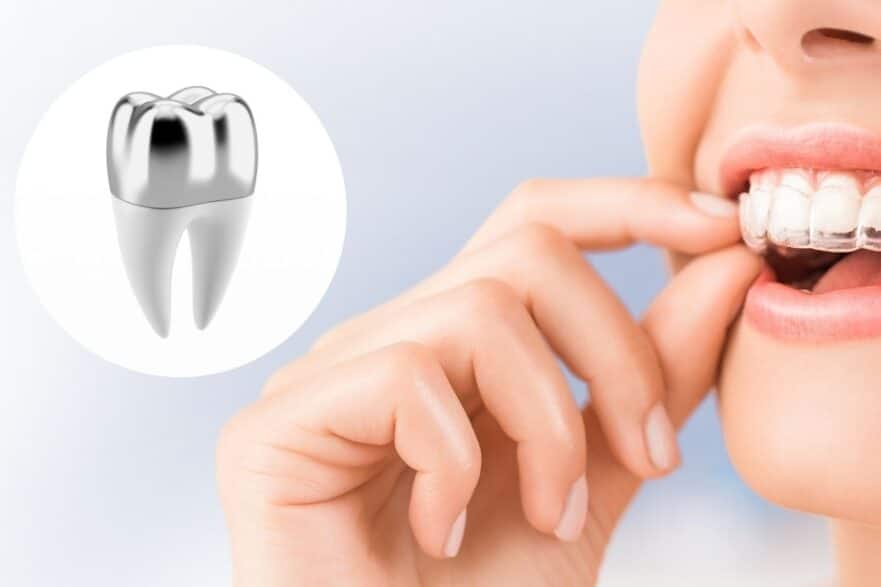
Considering Invisalign, but already have a dental crown? You’re not alone — many people wonder whether clear aligner therapy is still an option when restorative dental work is part of their smile. The short answer: yes, Invisalign can work with dental crowns — in most cases — but there are important details you should understand before starting treatment.
In this guide, we’ll walk you through how invisalign aligners interact with crowns, what to expect during treatment, how to prepare, and how to get the best results from your Invisalign journey.
What Are Invisalign Aligners and How Do They Work?
Invisalign clear aligners are a modern orthodontic option that gently moves your teeth into a more aligned position using a series of custom-made, removable trays crafted from smooth, virtually invisible thermoplastic.
Here’s the basic process:
- Digital Scan: Your dentist or orthodontist takes a 3D scan of your teeth.
- Treatment Plan: A personalized step-by-step plan is designed based on that scan.
- Custom Aligners: A series of clear aligners is fabricated to fit your smile.
- Wear Time: You wear each set of aligners about 20–22 hours per day, switching to the next tray every 1–2 weeks.
- Monitoring: Regular check-ups ensure your smile is moving according to plan.
Unlike traditional braces, Invisalign doesn’t use brackets and wires, making it a much more discreet and comfortable experience for many patients.
Dental Crowns and Invisalign — What You Need to Know
A dental crown is a protective cap placed over a damaged or weakened tooth to restore strength and appearance. Naturally, if you already have one or more crowns, you might worry whether they’ll interfere with your Invisalign treatment. The reassuring news from dental specialists is that in most cases, they won’t.
Crowns Don’t Stop Tooth Movement
Because a dental crown is bonded directly to the tooth and moves with it, Invisalign aligners can still apply gentle pressure to shift that tooth — crown and all — into a new position. This holds true for most modern crown materials, such as porcelain, zirconia, or metal-ceramic restorations.
Attachments and Crowns
Sometimes, small attachments (tooth-colored bumps) are bonded to teeth during Invisalign to help with specific movements. While attachments can be placed on some crowns, it may be more challenging depending on the crown material and shape. In cases where bonding isn’t ideal, your provider may place attachments on neighboring natural teeth instead.
Condition of Your Crown Matters
If a crown is old, loose, or damaged, your orthodontist or dentist might recommend repairing or replacing it before beginning Invisalign treatment to ensure the aligners fit well and work effectively.
Benefits of Getting Invisalign With Crowns
Choosing Invisalign when you have dental crowns comes with a range of advantages:
1. Discreet Orthodontic Treatment
Invisalign aligners are virtually invisible — ideal if you want orthodontic results without the look of traditional braces.
2. Comfort and Convenience
The smooth plastic trays are more comfortable than metal brackets and wires, and aligners are removable for eating and oral hygiene.
3. Tailored to Your Smile
Your custom treatment plan accounts for your unique dental work, including crowns, so movement is controlled and predictable.
What to Expect Before and During Invisalign Treatment
1. Comprehensive Evaluation
Before beginning Invisalign, a detailed consultation is essential. Your dental provider will:
- Evaluate any crowns and overall oral health.
- Take dental impressions or a digital scan.
- Confirm whether Invisalign is suitable for your needs.
This step helps ensure your plan is safe and effective.
2. Adjustments to Treatment Plan
In some cases, your dentist may tweak your Invisalign plan based on the presence of crowns or other restorations. Depending on your specific situation, they might:
- Skip attachments on crowned teeth.
- Use gentler force protocols for certain movements.
- Schedule more frequent monitoring.
This personalized approach maximizes comfort and results.
3. Wearing Your Aligners
For best outcomes, you’ll need to wear your Invisalign aligners consistently — about 20–22 hours per day — and only remove them for eating, drinking anything other than water, and brushing/flossing.
4. Monitoring Progress
Regular check-ups allow your provider to track how your teeth — including crowned ones — are responding and adjust your plan as needed.
Are There Any Risks or Limitations?
While Invisalign with crowns is successful in most cases, a few considerations are worth noting:
- Crowns Might Move More Slowly: Sometimes, crowned teeth move at a slightly different pace than natural teeth, potentially affecting the timeline.
- Attachment Challenges: Bonding attachments to crowns may not always work as expected, so alternative strategies might be used.
- Crown Checks: Loose or poorly fitted crowns should be addressed before Invisalign begins.
Your dental provider will walk you through all potential concerns during your consultation.
Ready to Start Your Invisalign Journey?
If you’ve been wondering, “Invisalign with dental crown”, now you know that the answer is a yes for most people — and it doesn’t mean compromising your dental restorations. The key to success is a personalized treatment plan with a qualified provider who understands your unique smile.
Ready for expert guidance? Visit our dental office to discuss your Invisalign options and take the first step toward a straighter, confident smile. Book an appointment today with Compton Orthodontics — your path to a beautiful smile starts here!
FAQs
1. Can you get Invisalign if you have a dental crown?
Yes — most patients with well-fitted, stable crowns can undergo Invisalign treatment with great success.
2. Will Invisalign damage my dental crown?
Not typically. Invisalign clear aligners apply gentle pressure designed to move the tooth and crown together without harm when supervised by a dental professional.
3. Do crowns need to be removed before Invisalign?
No — unless a crown is damaged, poorly fitting, or needs replacement for optimal appliance fit.
4. Can attachments be placed on crowned teeth?
In many cases, yes — but if bonding isn’t ideal, attachments might be placed on nearby natural teeth instead.
5. Does Invisalign take longer if you have dental crowns?
Not necessarily — but some movements might be slower, and treatment plans can be adjusted accordingly.
6. Is Invisalign still worth it with crowns?
Absolutely! Many patients with crowns enjoy the discreet, comfortable benefits of invisalign aligners and excellent results.