

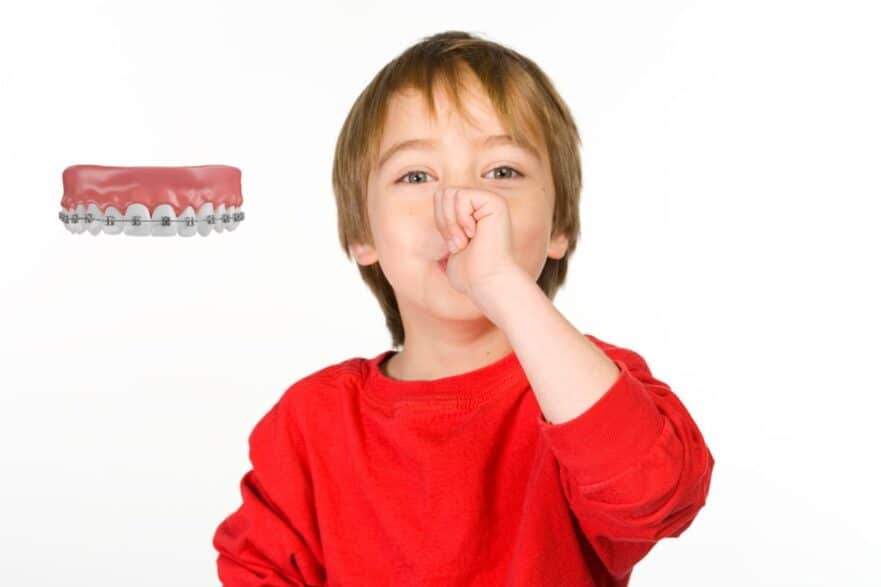
Thumb-sucking is a common habit among young children, often providing comfort and a sense of security. While it is generally considered a normal part of childhood development, persistent thumb-sucking can lead to dental issues that may require braces. Understanding why thumb-sucking can impact a child’s dental health and how braces can help address these problems is crucial for parents concerned about their child’s oral development.
The Impact of Thumb-Sucking on Dental Health
- Alignment Issues: Extended thumb-sucking can affect the alignment of a child’s teeth. The constant pressure from the thumb can push the teeth out of their proper position, leading to crowding or spacing issues. This misalignment can result in an uneven bite and may necessitate orthodontic intervention to correct it.
- Changes in Jaw Growth: Thumb-sucking can influence the development of the jaw. The habit can cause the front teeth to protrude, and the back teeth to shift inward, which can disrupt the natural growth pattern of the jawbone. This misalignment can lead to more complex orthodontic issues that require braces to rectify.
- Speech and Oral Function: Persistent thumb-sucking can affect a child’s speech and oral function. It can cause changes in the position of the teeth and the roof of the mouth, potentially leading to speech impediments and difficulties chewing or swallowing. Braces can help realign the teeth and improve oral function.
When to Consider Braces for Thumb-Sucking
While many children naturally outgrow thumb-sucking, those who continue the habit beyond the age of four or five may be at a higher risk of developing dental problems. If thumb-sucking persists, it is essential to monitor the child’s dental health and consult with an orthodontist. Early treatment can help determine if braces are needed and plan appropriate treatment.
Benefits of Early Orthodontic Intervention
- Preventing Further Issues: Early orthodontic evaluation can identify potential problems before they become more severe. Addressing alignment issues and jaw growth concerns early can prevent more extensive and costly treatments later.
- Improving Oral Health: Correcting dental misalignments with braces can improve overall oral health. Properly aligned teeth are easier to clean and maintain, reducing the risk of cavities and gum disease.
- Boosting Confidence: Straightening teeth and correcting bite issues can enhance a child’s self-esteem and confidence. Addressing these concerns early can help ensure that the child feels good about their smile as they grow.
Conclusion
Thumb-sucking is a common habit that can have lasting effects on a child’s dental health. While it is important to support children through the process of overcoming thumb-sucking, it is equally crucial to be aware of its potential impact on dental alignment. Braces can play a significant role in correcting issues that arise from thumb-sucking, ensuring that the child’s teeth and jaw develop properly. If thumb-sucking persists, consult with an orthodontist to evaluate whether braces are necessary and to discuss the best course of action for your child’s oral health.